
Circularity

At Scale

WHAT

we do

We invest in companies with developed circularity infrastructure technologies, at a stage where they are transitioning from first commercial prototype to rapid growth.   We aim to accelerate commercialization and asset deployment as a capital and operational partner, investing time and money to help them shape and execute their first commercial plants, followed by a transition to invest in their projects and accelerate the technology rollout at scale.

We take an influential minority stake as a lead investor in companies with technology proven to work at or near its initial commercial scale, with no scaling red flags, a competitive relative cost position, a compelling value proposition, and whose offtake products have a clear pathway to better relative costs or value than the incumbents they intend to displace.

The technologies we invest in produce Hard Asset, Limited Obsolescence (“HALO”) infrastructure projects, and we make these investments with the objective of positioning ourselves to make many repeatable project investments anchored by a handful of technologies from companies with whom we invest and work closely.

“At root, the primary driver of all of these technologies is material – the ever-growing manipulation of their atomic elements”

– Mustafa Suleyman, The Coming Wave

Why

we do it

We aspire to put a lot of assets to work at superior risk-adjusted returns, in technologies which are both economically and environmentally sustainable relative to the linear economy, with the goal of financial profit from cost effectively delivering superior customer value, while also contributing to the greater good of making the planet more inhabitable.

Circularity presents such an opportunity. You create value by converting low value residues into high value, circular products, while conserving natural resources. Successful examples are many and widespread, ranging from metals such as aluminum, steel, and copper to basic fibers such as paper or composite wood products, to applications such as process water for semiconductor fabrication. Each of these successful examples of circularity overcame challenges not too different from where many materials still find themselves today.

Mixed household waste, plastics, textiles, tires, and electronics are among the categories of materials which are now where those earlier successes were in their infancy. The markets for these remaining challenges are huge and relatively a-cyclical, and they represent the opportunity to deploy enormous amounts of private capital at attractive returns. Moreover, these circular commodities have low or negative carbon intensity. They tend to generate a higher Carbon Return on Investment (“CROI20”) than classic climate-focused investments, while offering many other benefits, mitigating pollution, microplastics, vermin, or disease vectors.

“Nature is a totally efficient, self-regenerating system. If we discover the laws that govern this system and live synergistically within them, sustainability will follow and humankind will be a success.”

– Buckminster Fuller

How

we do it

To deploy assets at scale, you need a large market. As a proxy, we have focused on technologies which show the capability of saving a gigaton or more per year of CO2e, when fully deployed to their Serviceable Available Market. To deliver superior risk adjusted returns, you need to reduce costs and cycle time through scale and repetition, and you need a strategy which positions you to do so. We look to anchor our strategies around innovations which provide breakthroughs in relative cost without “assuming away” the things which have held back legacy solutions. This approach causes us to search for technologies which squarely address legacy solutions’ historic obstacles, and seek breakthroughs which eliminate expensive, legacy process steps. Mixed household waste, plastics, textiles, tires, and electronics are often compounded materials inside of products, comprised of heterogenous materials. These mixed waste streams rely much more on separation and decontamination than many of the earlier circularity successes, which generally came from more homogenous waste streams.

Mechanical separation represents the current state of the art in waste, and yet it is axiomatic that separation or decontamination get easier as matter shifts phases from solids to liquid to gas. In the production of circular materials from waste, this drives our thematic focus on finding ways to more effectively and efficiently decontaminate, without crossing thresholds that degrade value or produce unwanted conditions or by-products. Subject to their mutual interest, we offer and support a portfolio company strategy which adds project development discipline, mitigates the risk of stranded development costs, employs a bespoke insurance product to mitigate specific delivery risk, and adds lessons and perspective from geographies not familiar to management.

Next Circular Technologies Fund

  • Burcell

    Waste-to-Fuels
  • SYNOVA

    Circular Chemicals
  • EVRNU

    Circular Textiles
  • InPipe

    Baseload Renewables

TEAM

MANAGEMENT

“In the face of any number of unknown and evolving threats…. humility, doubt, and curiosity are vital to discovery.”

– Adam Grant, Think Again

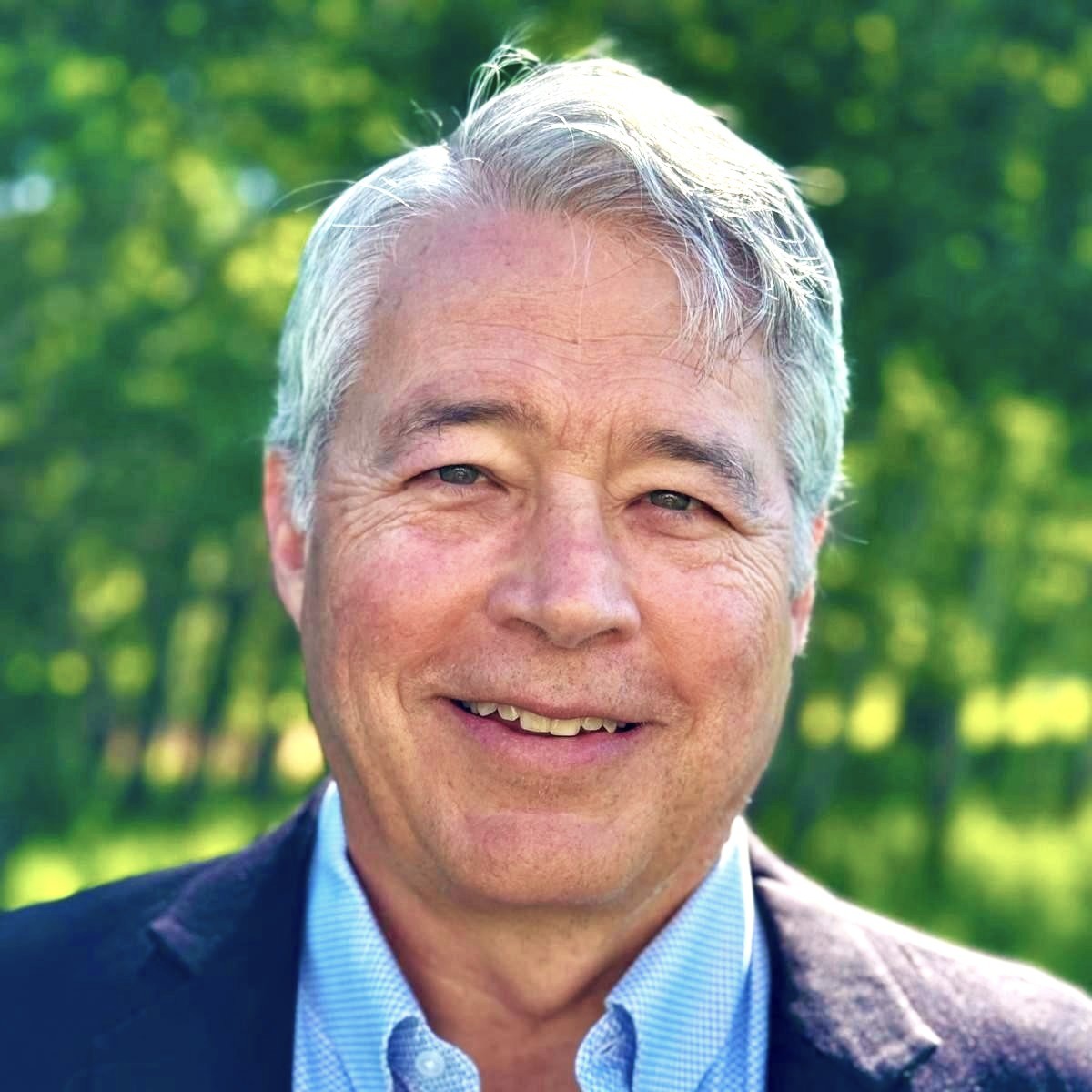
Giffen bridges operations and private equity finance, in line or advisory positions, with 35 years of experience structuring deals and applying strategic and operational improvements to private equity investments and turnarounds, roughly half of which were spent in line management, leading the transformation of operations in mature buyouts or as founder and CEO of a startup. This includes 15+ years in circular materials sectors.

Together with Aidan, Giffen founded Synova in 2011 and served as its Chief Executive Officer through 2018, at which time he moved upstairs to join his largest investor to form the venture fund now known as Next Cycle (that investor is no longer associated with the fund)). Synova anchored the fund.

Prior to Synova, Giffen served as an Operating Executive at Golden Gate Capital, where he first came across the Synova technology. Before Golden Gate, Giffen was a Senior Managing Director at Evercore Partners Inc., where he worked in Evercore’s private equity group focusing on energy and other investments.

Earlier in his career, Giffen spent six years with Bain & Company, where he advised management teams and private equity and VC firms in due diligence, turnarounds, performance improvement, and exits, and where he originated two successful deals for Bain Capital. In 1993, he left Bain to lead the operational transformation of a private equity client’s portfolio company, where he led operations and served as a core member of an executive team that delivered five years of 25 percent IRR before organizing a second management buyout that delivered a 3x return.

Giffen is a graduate of Stanford Law School and Southern Methodist University, and a non-practicing member of the California Bar and former Certified Public Account.
Giffen-05

Giffen Ott

Founder & Managing Partner

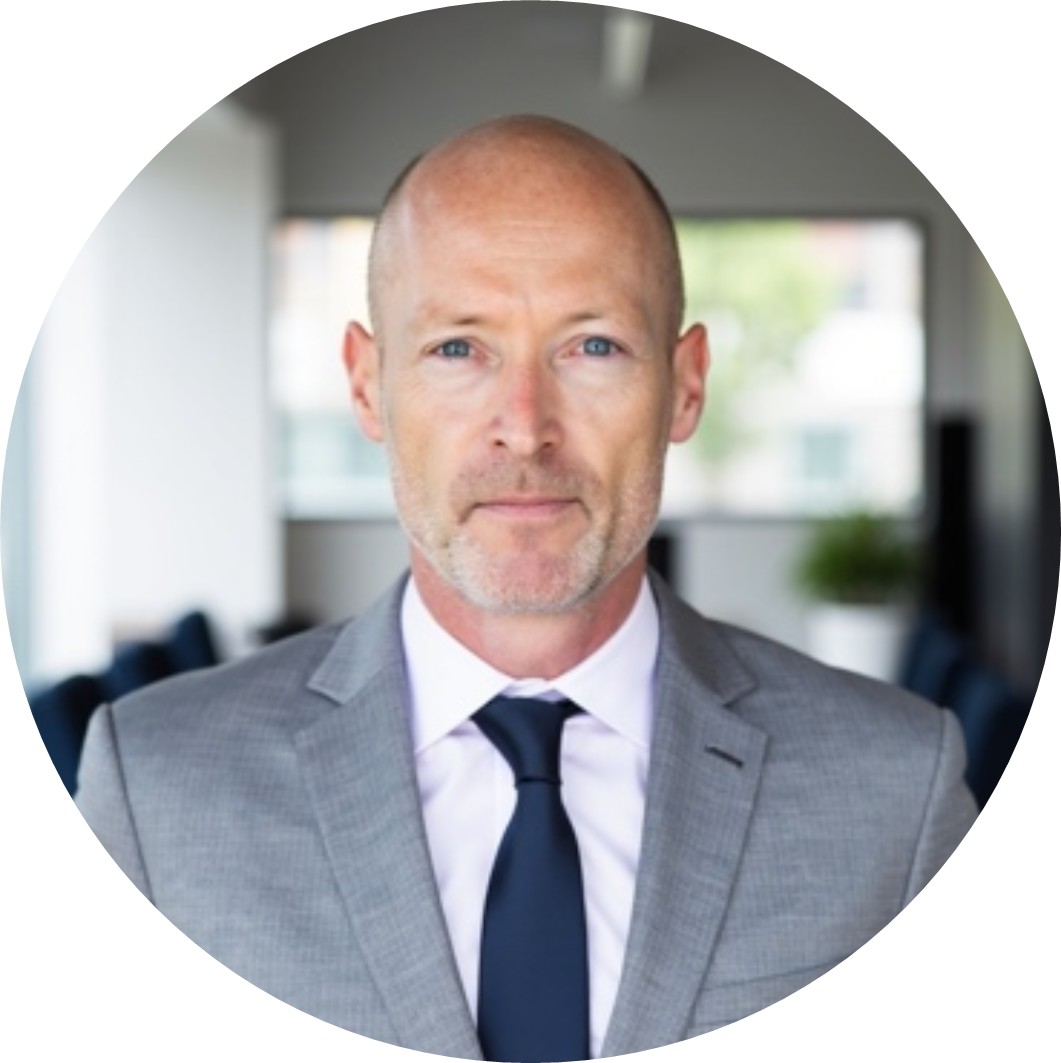
Aidan is a co-founder, partner, and CDO at Next Cycle, a growth equity fund management company focused on investments in circular technology and infrastructure assets. Aidan is a seasoned climate technology finance professional with 25 years of experience in investment banking, private equity, operations, project development, and project finance, and, together with Giffen, co-founded Synova, a waste-to-chemicals company. Aidan is actively involved in the climate finance ecosystem working with early and growth stage companies, and has co-founded several companies, including Syngenera, a natural-based solutions company.

Prior to his current role, he was a co-founder and managing director of Sinova Capital, a climate technology merchant bank, as well as managing director of a Shanghai-based private equity firm, Cathay Fortune Corporation (CFC).

He has also been a consultant and advisor to the International Finance Corporation (IFC), Asian Development Bank (ADB), USAID, and other public sector clients. Aidan was also the senior managing director for two technology-focused boutique investment banks in North America, where he managed the corporate finance practices. Through his experience working for both the private and public sectors, Aidan has developed an extensive network in the climate finance community across the Americas, Europe, and Asia.

Aidan graduated from the University of Liverpool, in Architecture, and as a member of the RIBA, practiced for several year before completing his Executive MBA studies at the University of Washington, with a specialty in Environmental Management.

002

Aidan Stretch

Founder, Partner & CDO

© 2026 Next Cycle Management LLC – All Rights Reserved.